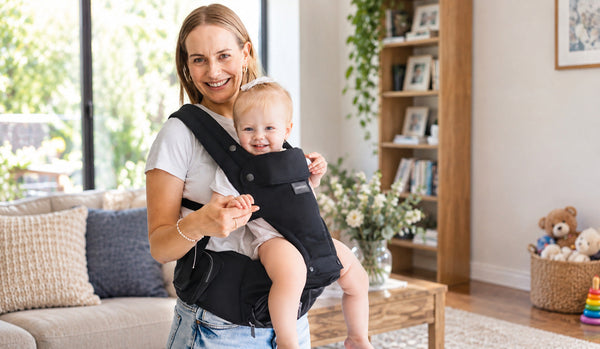
Gentle Support: Baby Carrier with Hip Seat

You know that feeling when your little one just won’t stop squirming? And your back? It’s already whispering threats of a long, painful night. Honestly, I’ve been there. You love the cuddles, but your spine is staging a quiet rebellion.Here’s the thingmost parents get told that babywearing is supposed to be this magical, bonding experience. And it is! Until your shoulders start screaming and your hips feel like they’ve run a marathon. That’s where the baby carrier with a hip seat comes in. Not just another gadget. Think of it as a little chair for your baby and a little mercy for your lower back.Let’s break this down. Not like a boring manual, but like a chat over coffee. Because you don’t need jargon. You need something that works.
Wait, what exactly is a hip seat carrier?
I’ll be honest when I first heard of the hip seat, I pictured a tiny lawn chair strapped to a parent’s waist. It’s not that. A baby hip seat carrier is basically a padded shelf that sits around your hips. The baby perches on it, like a little kangaroo in training. Some versions have a full back panel and straps (making it a traditional carrier with a built-in seat), while others are just the belt and seat meant to be used with one arm for support.But the real magic? The weight transfers from your shoulders and upper back down to your pelvis. Your pelvis is a champ. It was built for carrying. Your shoulders? Not so much.So yeah, it’s a baby carrier with a hip seat that actually understands basic physics. And your aching back will thank you.
Why your regular carrier might be lying to you
Don’t get me wrong. I love a good soft structured carrier. They’re cozy. But after an hour? My traps feel like I’ve been shrugging boulders. The problem is most standard carriers concentrate all the load on your upper body. And babies grow. Fast. That eight-pound newborn becomes a twenty-pound wiggle monster before you’ve finished your first cup of coffee.Rhetorical question: Have you ever worn a heavy backpack on just your shoulders for three hours? Exactly.An ergonomic baby carrier should distribute weight evenly. That’s the promise. But many miss the mark because they ignore the hip joint’s natural role. Your hips are the strongest load-bearing joints in your body. Why not use them?An ergonomic baby carrier with a hip seat changes the game. The seat juts out slightly, creating a little ledge. Your baby sits, you support, and suddenly your spine feels like it can breathe again.
The hands free lie (and the truth)
We all want a hands free baby carrier. The dream: sipping tea, answering emails, folding laundry all while the baby happily observes the world. But here’s the real talk. Hands free doesn’t mean you never touch your child. It means you’re not constantly supporting their entire weight with your arms.A hands free baby carrier with a hip seat gets you closer to that dream. Because the seat does the heavy lifting (literally). Your hands are free to grab a pacifier, fix a snack, or just wave dramatically while telling a story. But you’ll still want to keep one hand near your baby, especially when bending or moving quickly. That’s not failure. That’s just being a careful parent.Let me clarify a mild contradiction: earlier I said hands free. Now I’m saying keep a hand near. What gives? True freedom isn’t about never touching your child. It’s about not being strained by them. You can have a hand on their back for comfort but your muscles aren’t doing deadlifts all afternoon. See the difference?
Traveling with a tiny human? You need this.
Ever tried navigating an airport with a stroller, a diaper bag, and a meltdown in progress? It’s a special kind of chaos. The best baby carrier for travel isn’t necessarily the bulkiest or the one with the most buckles. It’s the one that folds small, feels light, and doesn’t make you sweat through your shirt.Enter the lightweight baby carrier. A good lightweight baby carrier with a hip seat often weighs less than two pounds. You can stuff it in a backpack, pull it out when your toddler refuses the stroller (again), and wear it through cobblestone streets or crowded subways without feeling like a pack mule.I’ve seen parents try to use those huge framed hiking carriers for a simple zoo trip. Why? Unless you’re scaling a mountain, do you really need all that metal and mesh? Probably not. A lightweight baby carrier with a simple hip seat design is often more practical. Plus, it’s easier to get on and off by yourself. No contortionist moves required.
Is it safe for newborns? Let’s be real.
Here’s where I have to pause and be honest. Most baby carriers with hip seat products are designed for babies who can sit up independently, usually around 6 months. For newborns, their spine is still in that cute little C-curve, and they need full head and neck support. A standard hip seat alone won’t cut it.But some carriers (like the infant carrier with seat variants) include a high back panel and adjustable head support. Those can work for younger babies, but always check the manufacturer’s guidelines. Don’t trust a random influencer. Trust your pediatrician and the manual.For the first few months, stick with a wrap or a structured carrier designed specifically for newborns. Then, around the half-year mark, welcome the hip seat into your life with open (and less painful) arms.
What makes a best baby carrier with a hip seat?
I get this question a lot. Which one should I buy? And I hate giving one-size-fits-all answers because every parent is different. But here are the features that separate the best baby carrier with hip seat from the cheap knockoffs:
-
Breathable fabric – Babies run hot. You run hot. Mesh panels or natural cotton make a world of difference in July.
-
Adjustable seat width – As your baby grows, the seat should widen to support those chunky thighs.
-
Padded shoulder straps – Thin straps dig in. Thick, contoured straps feel like a gentle hug.
-
Removable hip seat – Some designs let you detach the seat and use it as a standalone belt for quick carries. Super handy for parking lot dashes.
-
Washable – Spit-up happens. Drool happens. Mysterious sticky substances happen. If it’s not machine washable, skip it.
One brand I’ve personally liked? The Tushbaby (yes, silly name, solid product). But also check out Ergobaby’s hip seat carrier or Momcozy’s version. They’re not paying me to say thisI just read a lot of parent forums and saw consistent praise for their lumbar support.
But isn’t a hip seat just a fad?
Honestly? I thought the same thing. Another baby product designed to separate me from my money. But after watching a friend carry her toddler for three hours at a street fair without once complaining about her back, I changed my mind.The baby hip seat carrier has been around for decades in other cultures. Think of Asian baby carriers that are basically a woven hip wrap. The modern version just adds buckles, padding, and sometimes a storage pocket (genius, by the wayI’ve stashed keys, a phone, and a granola bar in mine).So no, it’s not a fad. It’s an evolution. Like going from a wooden wagon to a stroller with shocks.
One minor warning (because nothing is perfect)
Okay, I promised honesty. Here’s the catch: A baby carrier with a hip seat can put pressure on your hips if you wear it for hours and hours every single day. Your body still needs breaks. And some people with pre-existing pelvic issues might find the belt uncomfortable. Test it for short periods first. Also, if you have a very small baby (under 6 months or under 15 pounds), the seat might push their legs into a position that’s not quite right. Always check the M-position (knees higher than bum).But for the vast majority of parents with wiggly, heavy, I-want-to-be-held-but-also-look-around babies? It’s a lifesaver.
At what age can I start using a baby carrier with a hip seat?
Most are safe from around 6 months, when the baby can sit up unassisted.
Is a hip seat carrier good for my lower back pain?
Yes, it transfers weight to your hips and pelvis, reducing strain on your lower back.
Can I breastfeed while using a baby hip seat carrier?
Yes, the seat creates a stable ledge that makes nursing easier without removing the carrier.
How do I clean a baby carrier with a hip seat?
Most have removable, machine-washable covers, always check the label first.
Do I still need a regular carrier if I buy a hip seat one?
Many parents keep both a wrap for newborns and a hip seat for older, heavier babies.