How to Choose the Perfect Baby Carrier Sling for Your Needs

I remember standing barefoot in my living room, tangled in a long strip of linen, my newborn screaming against my chest. My coffee sat stone-cold on the counter, and I was one tiny frustration away from giving up entirely.
If you’re reading this, you’ve probably felt that mix of hope and overwhelm, too. You just want to keep your baby close and still use both hands, maybe to eat a sandwich or fold a pile of onesies. Choosing the right baby sling carrier can feel like you’re cracking a secret code. But it doesn’t have to.
What Actually Is a Baby Sling Carrier?
A baby sling carrier is simply a one-shoulder baby carrier that cradles your little one in a deep, hammock-like seat right against your body. Unlike those backpack-style carriers with all the buckles and padded straps, a sling is all fabric and rings or sometimes just a loop of fabric. The magic is in the simplicity. It hugs your newborn into that curled-up, froggy position they love, mimicking the womb. And because it’s just one layer over your shoulder, it’s wildly easy to pop on and off during those dozen quick trips to the mailbox or the doctor.
The term infant sling often gets tossed around interchangeably, but technically, a sling can be a ring sling, a pouch, or even a hybrid that marries the ease of a sling with some wrap-like fabric. A newborn sling carrier emphasises that a snug, womb-like fit is specifically designed for a tiny baby who still tucks their legs up and has zero head control.
I’ll never forget the first mom I helped in a babywearing consultation. She had a week-old baby and a ring sling still in the box, terrified she’d do it wrong. Five minutes of adjusting, and her baby melted into a deep sleep right against her heartbeat. She looked up, eyes glistening, and whispered, I didn’t know it could be this peaceful. That’s the goal.
Safety First: How to Use a Newborn Sling Carrier Safely
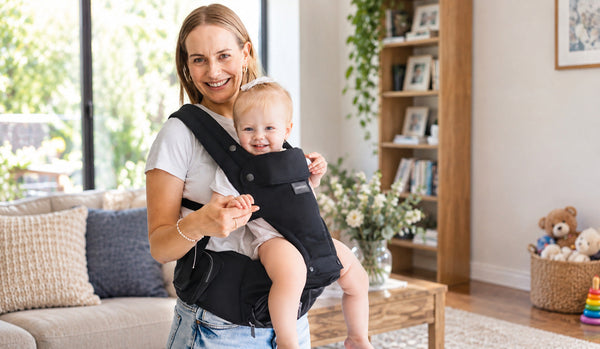
I get it, you’ve heard the scary stories. But here’s the truth. A carrier for newborn babies must meet some non-negotiable guidelines, and once you know them, your confidence skyrockets. I always teach parents the T.I.C.K.S. rule:
- Tight: The sling should feel like a snug hug, no loose fabric.
- In view: You need to see the baby’s face at all times, without tilting or craning your neck.
- Close enough to kiss: The top of the baby’s head should rest right near your chin.
- Keep chin off chest: There must be enough room for two fingers under their chin so their airway stays open.
-
Supported back: Their tummy and chest are flush against you, not curled into a ball.
That last one is crucial for a newborn sling carrier because newborns don’t have the muscle strength to lift their heads from a slumped position. You also want to see that lovely M shape with their knees higher than their bottom and fabric supporting them from knee to knee. The International Hip Dysplasia Institute has great visual guides on this if you’re a visual learner like me.
How to Pick the Best Baby Sling Carrier for Your Life
So, what makes the best baby sling carrier? It’s not about what’s trending on Instagram. It really comes down to a handful of personal factors.
Fabric Matters More Than You’d Expect
If you run hot or live somewhere with brutal summers, a linen or cotton blend is your best friend. It breathes, wicks moisture, and holds its shape even when you’re sweating through a park stroll. For a squishy newborn, bamboo or modal feels like butter against their fragile skin, but it can get saggy as they plump up into a 20-pound butterball. Think ahead. A sturdy woven wrap converted into a ring sling can literally carry you from those first few days into toddlerhood, but it requires a bit more breaking in like a good pair of leather boots.
Your Body, Your Fit
A sling that’s a dream on a petite frame might dig into a plus-size parent’s shoulder if the fabric isn’t wide enough. I’ve seen tall dads struggle with pouch slings that are sized too small, and shorter moms swimming in extra-long tails that nearly trip them. The best baby sling carrier should feel like a custom garment. Ring slings are wonderfully adjustable, with gathered or pleated shoulders that can be fanned out over your arm. Avoid anything with bulky padding that creates pressure points; a smooth, spread-out shoulder works with your body, not against it.
Your Everyday Rhythm Matters, Too
Are you a city dweller who walks to the farmer’s market and pops babies in and out of the car constantly? A ring sling practically lives in the passenger seat, ready for a 10-second up. If your days are mostly about swaying in the nursery and pacing the hallway with a colicky infant, a slightly stretchy newborn sling carrier cradles them in a flow, jiggly way that can soothe even the fussiest cries. A pouch sling, which is just a seamless loop of fabric, is lightning fast but must fit exactly right, so it’s less forgiving if your weight fluctuates postpartum.
Ease of Use: The 15-Minute Learning Curve
I won’t sugarcoat it: there’s a learning curve. But it’s not the mountain you think. When I teach parents, I have them practice threading the ring sling with a teddy bear first. The mantra is: smooth fabric, no twists, deep seat. Once the baby’s in, you tighten the rail by rail top edge for head support, the middle for the torso, and the bottom rail to keep the knees high. The whole thing clicks in about 15 minutes if you give yourself grace and a mirror. The best baby sling carrier isn’t the one with the fanciest name; it’s the one you’ll actually use without a headache.
Versatility: From Newborn to Toddler
A quality infant sling isn’t just a newborn thing. As your baby grows, you can shift to a hip carry, letting a curious 6-month-old peek out at the world while still staying securely attached. Some parents even master a safe back carry with a sling, though that’s for seasoned wrappers. A good linen ring sling can hold a toddler on your hip during a meltdown at the zoo and still look like a smart accessory.
Common Mistakes and Quick Fixes
Mistakes happen. I still sometimes rush and end up with twisted fabric that digs into my neck. The quick fix? Stop, unthread those rings, and start again. If you feel your baby slipping down too low, the ring was probably positioned too far from your shoulder to begin with; start with the rings up high, almost like a corsage. And if your shoulder aches, check that the fabric is spread all the way down your arm, not bunched on top of your shoulder. A good rule: you should be able to slide your hand flat between the sling and your neck. If you can’t, pause and readjust.
Sometimes parents worry their baby’s legs look too splayed. That M shape actually protects their tiny hip joints, so don't be afraid of a nice deep seat. If your baby fusses the moment you put them in, try walking around immediately. Movement soothes them, and a baby sling carrier lets you bounce and shush without your arms going numb.
A Few Real-World Recommendations
When I had my second baby, I lived in a Sakura Bloom simple silk sling. It was light, strong, and breathed through a humid July in New York. For a friend who needed a budget-friendly pick, we found a cotton Hip Baby ring sling that broke in as soft as a T-shirt after one wash and worked beautifully for her newborn. The key is matching the carrier for newborn needs to your real life, not an aspirational one. There’s no single safest brand because safety lives in how you wear it, not the label.
Frequently Asked Questions
Can I use a baby sling carrier for a newborn?
Absolutely. A proper newborn sling carrier supports their head, keeps their airway open, and cradles them in a fetal position. Just follow the T.I.C.K.S. rule every time.
What’s the difference between a ring sling and a pouch?
A ring sling has fabric threaded through two rings, so it’s fully adjustable. A pouch is a fixed loop of fabric with no rings, so sizing must be spot-on.
Which is the best baby sling carrier for hot weather?
Linen or a lightweight cotton blend. They breathe and don’t trap sweat, keeping both of you cooler.
Can I nurse a baby in a baby sling carrier?
Yes! Once you’re comfortable, you can loosen the sling slightly to bring the baby to the breast discreetly, then re-tighten. Practice at home first.
How do I know if my infant sling fits correctly?
The baby should be visible, kissable, in a deep seat with knees higher than bum, and the fabric should be spread smoothly over your shoulder and back.
Conclusion
Close your eyes and imagine the smell of your baby’s head tucked under your chin while you sip that coffee, actually hot this time. That moment is closer than you think. The perfect baby sling carrier is waiting to become an extension of your body and a safe little nest for your little one.
If you’re still waffling or you’ve tried and your sling just feels off, leave me a comment below. I read every single one and would be genuinely thrilled to help you troubleshoot. You’ve got this, and your baby is lucky to have a parent who cares this much.